The choice begins with the fuel in service: road and standard fuels, marine fuel calibration, or heavy-fuel operation.
NTROPYX · Product decision
Choose the catalyst by fuel. Prove it in operation.
One Swiss molecular combustion catalyst platform, specified by operating fuel family. Select the bottle, dose at the point of fill, then verify the gain against fuel use, emissions and maintenance behavior.
The catalyst is introduced at the point of fill, storage or bunkering, keeping deployment light for fleets and vessels.
Fuel family, dosing profile and annual volume lead directly into proof review and economic modelling.
NTROPYX · Origin
The Birth of NTROPYX
Everything begins below the atom.
One atom. The unit of all matter.
Then billions, moving together.
NTROPYX
§ 01 · Product range
The bottle follows the fuel.
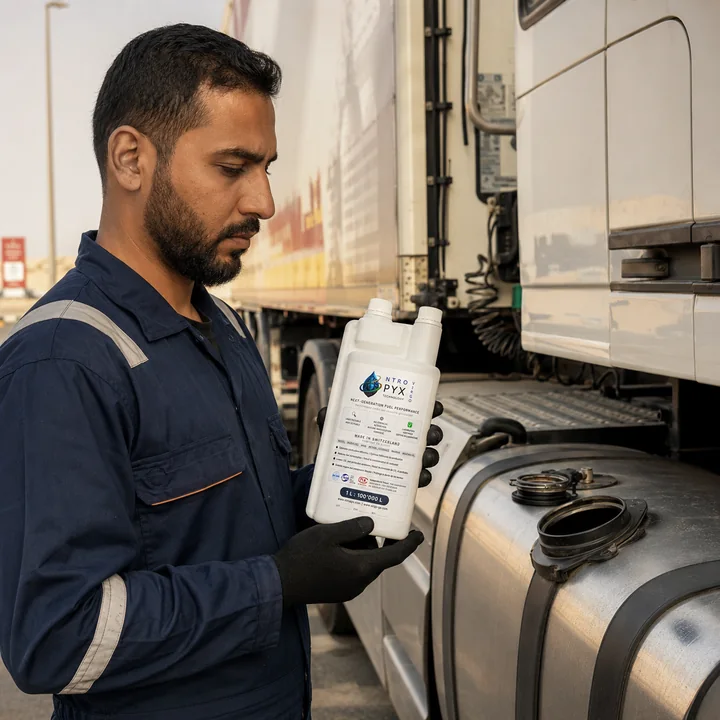
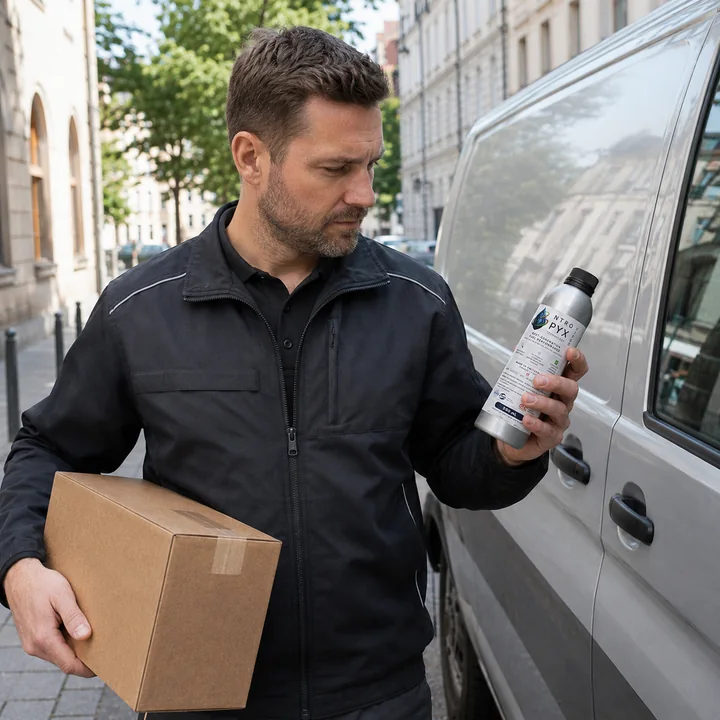
White covers road and standard hydrocarbon fuels. Brown and black are calibrated for marine and heavy-fuel operating contexts.


Scroll down
White bottle: diesel, gasoline, HVO, biodiesel, heating oil. Brown + black: HSFO, VLSFO, MGO, MDO, IFO380.
NTROPYX · Range
What ships, and what it treats.
Four packagings, one catalytic role. The bottle changes with the fuel and with the volume to be treated — what the catalyst does to the engine does not.
Swiss made Swiss quality and precision

All fuels · not marine
One Dose
40–60L
litres of fuel treated · from one 3 mL syringe
The smallest unit in the range, dosed for a single tank — the road formulation, in one shot.
Raises octane in petrol and cetane in diesel.
- Reduces fuel consumption
- Reduces pollutant emissions
- Increases power
- Extends engine life
- Extends particulate filter life
- Does not alter fuel chemistry
- Undetectable in laboratory analysis
- Diesel, petrol, HVO, biodiesel

Diesel · Petrol · HVO · Biodiesel
Road & standard fuels
L
litres of fuel treated · from one 1 L bottle
Concentration
Tap a concentration, or drag the selector across the range.
One bottle, one axis. The concentration follows the volume you have to treat — the bottle, the formulation and the role do not change. Three steps are published; any other concentration is formulated to the operation it serves.
Raises octane in petrol and cetane in diesel.
- Reduces fuel consumption
- Reduces pollutant emissions
- Increases power
- Extends engine life
- Extends particulate filter life
- Does not alter fuel chemistry
- Undetectable in laboratory analysis
- Diesel, petrol, HVO, biodiesel


Marine fuels only
Marine & heavy fuel
500 000L
litres of fuel treated · from one 1 L glass bottle
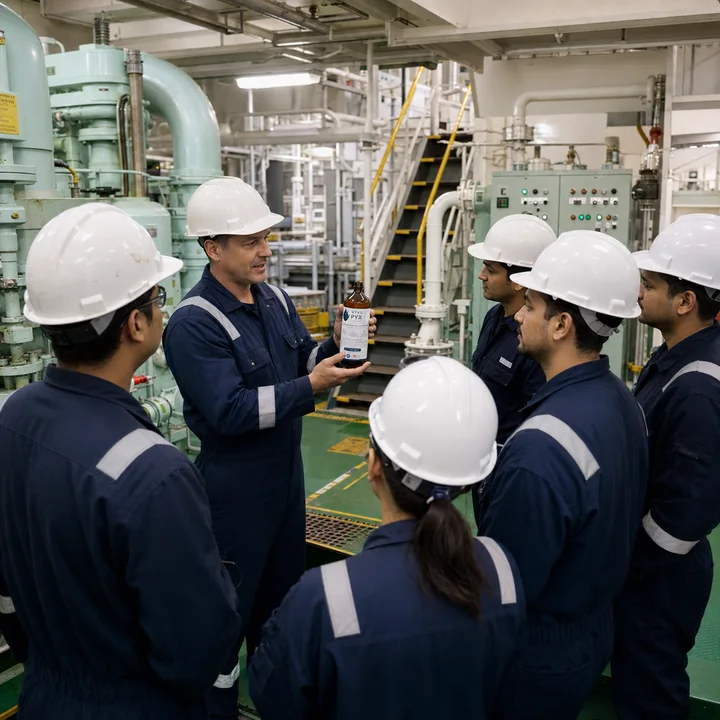
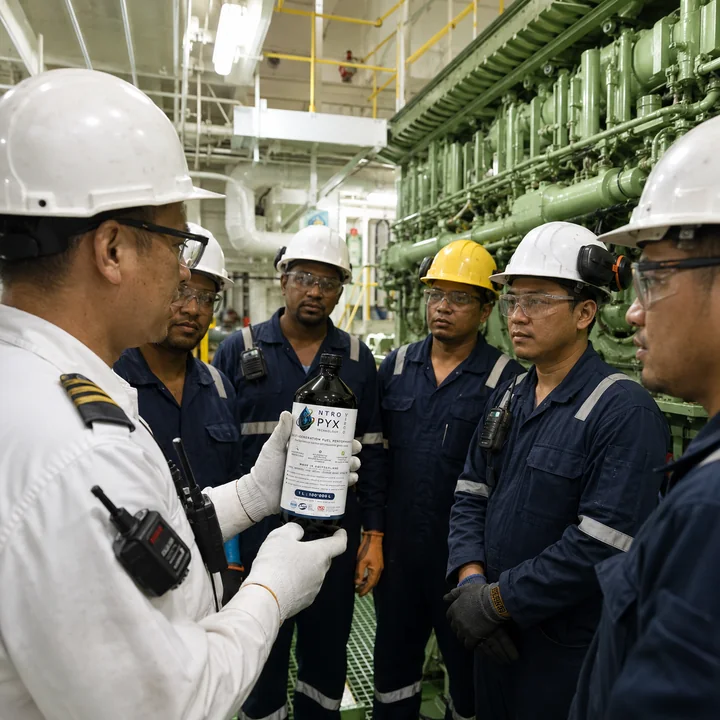
Two glass bottles for two grades of marine fuel. Brown is calibrated for the lighter marine diesel, black for heavy marine fuel.
Burns cleaner on heavy fuel and marine diesel.
- Reduces fuel consumption
- Reduces pollutant emissions
- Increases power
- Extends engine life
- Extends particulate filter life
- Does not alter fuel chemistry
- Undetectable in laboratory analysis
- HSFO, VLSFO, MGO, MDO, IFO380

All fuels · competition
Race
60–80L
litres of fuel treated · from one 100 mL bottle
Built for pure power. The most complete combustion in the range, on any fuel — the formulation the others are measured against.
The largest power gain in the range.
- Raises octane in petrol, cetane in diesel
- Reduces fuel consumption
- Reduces pollutant emissions
- Increases power
- Extends engine life
- Extends particulate filter life
- Does not alter fuel chemistry
- Undetectable in laboratory analysis
Race in the shop
Currently out of stock
§ 02 · Operating logic
Same catalytic role. Different operating context.
NTROPYX is not selected like a generic additive. The buyer starts with the fuel family, confirms the dosing route, then validates the operating result through proof, simulator and sector evidence.





Commercial route
Start with the fuel family. Finish with measured economics.
Use the product family to frame the pilot, review the proof ledger, then model the annual gain with real fuel volume and price assumptions.
NTROPYX · Proof ledger
Measured combustion gain. Verified before persuasion.
Bench reports, accredited laboratory chain and field records showing measurable fuel reduction, cleaner output and stronger combustion response.
8-12% fuel saving window
CNAS L23122 · ILAC-MRA · CMA
Evidence pack under qualification
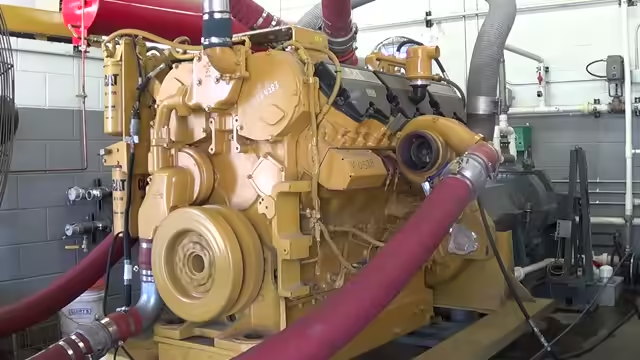
§ 03 · Evidence chain
Three checks a serious buyer needs.
Bench, road and marine references give technical buyers three ways to verify the same combustion direction.
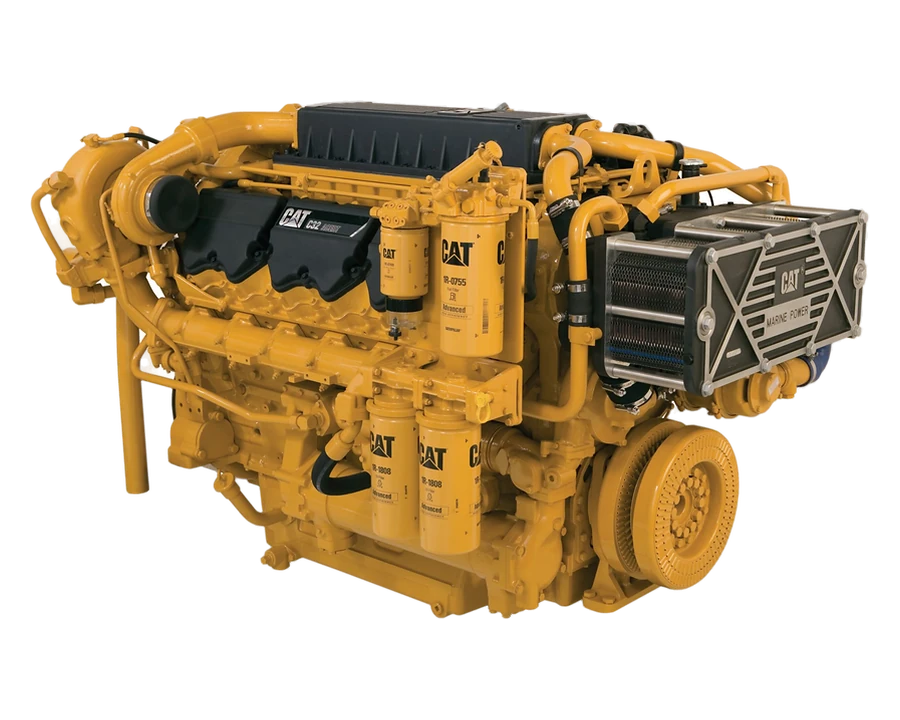
01 · Bench
8–12% fuel saving window.
Controlled engine bench evidence measured under a defined engine context before commercial projection.
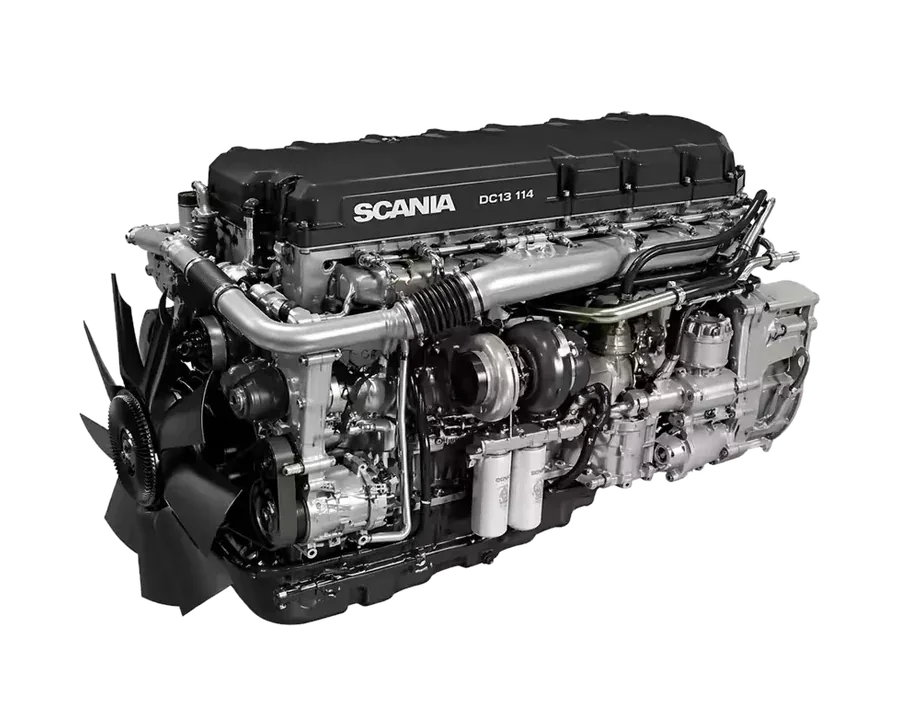
02 · Road
Up to 70% pollutant reduction.
Heavy-duty road freight proof connects laboratory emission readings to fleet-level validation.
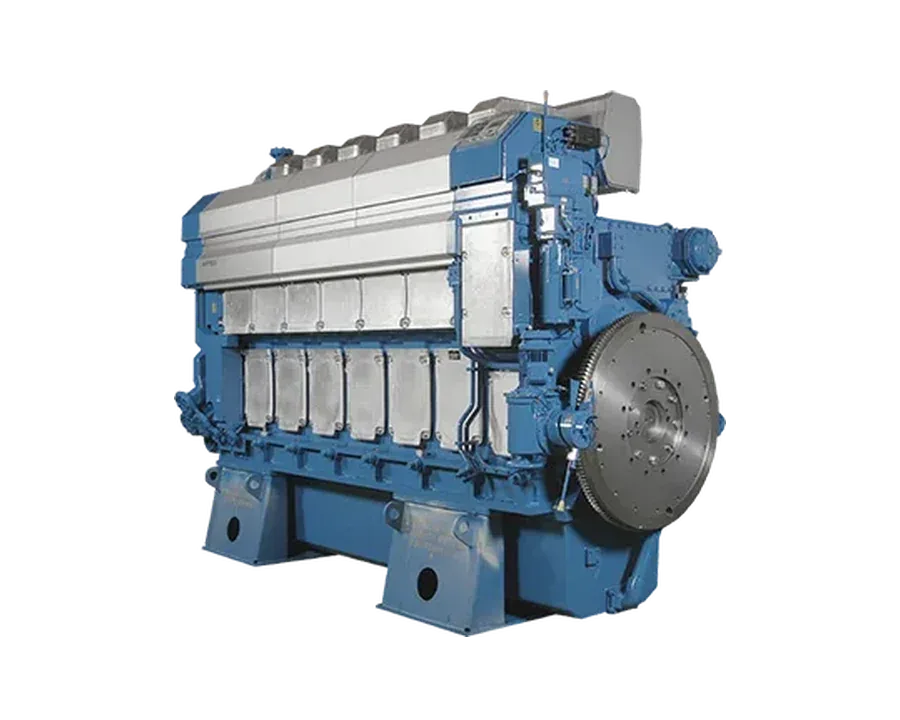
03 · Marine
Up to 25% useful output.
Marine large-engine evidence confirms the combustion logic beyond small engines and light-duty fuel use.
§ 04 · Measured result
What the record shows.
NTROPYX is presented through measured combustion data, not marketing claims.
Bench reports, accredited laboratory chain and field records across road, marine and industrial diesel engines confirm one consistent technical direction: fuel consumption reduced, pollutants lowered, combustion response strengthened.
- 8–12%fuel saving window across bench and fleet references
- Up to 70%pollutant reduction in controlled emission readings
- Up to 25%useful output gain, measurable power response improvement
§ 05 · Laboratory chain
Accreditation marks stay attached to reports, not decoration.
CNAS, ILAC-MRA and CMA identify the issuing laboratory recognition chain for the referenced Chinese test reports. They are laboratory accreditations, not NTROPYX or Virgo Global Energy accreditations.


§ 06 · Report access
Need the report pack?
Qualified buyers can request the technical evidence pack before moving into ROI modelling. The next step is commercial qualification with documented scope and decision data.